|
by
Don Harden
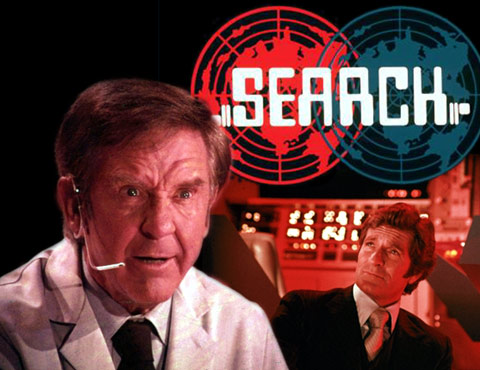
 Search,
which premiered Sept. 13, 1972, lasted only a single season on NBC-TV.
Difficult to believe, but there was a notable lack of sci-fi on the tube
and in the movies back then. Search,
which premiered Sept. 13, 1972, lasted only a single season on NBC-TV.
Difficult to believe, but there was a notable lack of sci-fi on the tube
and in the movies back then.
While comparing
Search to shows of today is unfair, the concept still has a contemporary
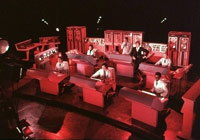
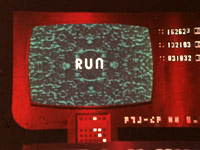
ring to it. Yes, the computers appear bulky and the graphics seem crude,
but the technology is basically sound. Comparable
to classics like Star Trek or The Wild Wild West, this series
is both anachronistic and futuristic at the same time.
The series
centered on three revolving characters: Hugh Lockwood (played by Hugh
O'Brian, seen above right), Nick Bianco (Tony Franciosa), and C. R. Grover
(Doug McClure). They were agents who worked for the Probe Division of
World Securities, specializing in the search and recovery of "that which
is missing."
 Each
week, one of these Probe agents would be the star of the episode. This
revolving format was successful for The Name of the Game, a previous
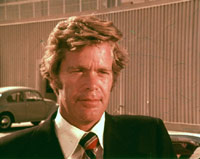
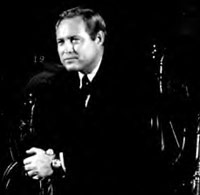
NBC series produced by the late Leslie Stevens (seen left), the creator
and producer of Search. Each
week, one of these Probe agents would be the star of the episode. This
revolving format was successful for The Name of the Game, a previous
NBC series produced by the late Leslie Stevens (seen left), the creator
and producer of Search.
The Probes
answered to Mr. V. C. R. Cameron (Burgess Meredith), the director of Probe
Control. Each agent was electronically linked to headquarters via a sound
and telemetry transmitting mini-camera or scanner, which was cleverly
concealed as a medallion, ring, or tie tac.
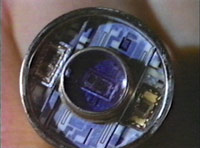 The
scanner was able to retrieve signals "off presence" of the agent and give
medical telemetry readings of the people our Probe agents would run into.
For example, an adrenaline surge indicating a probable lie could be detected
by Probe Control and then instantly relayed to the agent who was listening
in via a "permanent built-in earjack." The
scanner was able to retrieve signals "off presence" of the agent and give
medical telemetry readings of the people our Probe agents would run into.
For example, an adrenaline surge indicating a probable lie could be detected
by Probe Control and then instantly relayed to the agent who was listening
in via a "permanent built-in earjack."
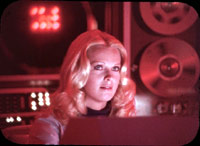 Appearing
in the pilot and some early episodes was actress Angel Tompkins (seen
left) as a telemetry specialist. Angel was being featured in an issue
of Playboy as the pilot (called PROBE) aired. Appearing
in the pilot and some early episodes was actress Angel Tompkins (seen
left) as a telemetry specialist. Angel was being featured in an issue
of Playboy as the pilot (called PROBE) aired.
When the
series began, it was easily some 20 or 30 years ahead of its time. This
was 1972 when home computers, DVDs, and cellphones were a dream of the
future.
 For
the average 1970s viewer, the technology may have seemed a bit difficult
to identify with. Not so for younger viewers seeking action-adventure
with a sci-fi twist, which Search filled adequately while it lasted.
This was three years after NBC cancelled the original Star Trek
and a few years before the sci-fi boom of the mid-to-late 1970s. For
the average 1970s viewer, the technology may have seemed a bit difficult
to identify with. Not so for younger viewers seeking action-adventure
with a sci-fi twist, which Search filled adequately while it lasted.
This was three years after NBC cancelled the original Star Trek
and a few years before the sci-fi boom of the mid-to-late 1970s.
 Some
memorable episodes include: Some
memorable episodes include:
"The Bullet" - Lockwood (Hugh O'Brian) is sent to an eastern European
country to help a defecting scientist escape to the West. The scientist
has developed a formula for toxic bullets, which could tip the balance
of power against the U.S. Lockwood ironically becomes the first candidate
for the antidote after being shot with the toxic bullets, and is on the
run from the state police while slowly dying at the same time.
 "Operation
Iceman" - Bianco (Tony Franciosa) and a team of Probe agents must stop
an assassin known as the Iceman from killing his next target, a US ambassador
who is leading an important worldwide conference. The Iceman succeeds
in outfoxing the agents at every turn and it appears more and more likely
that the killer will succeed. "Operation
Iceman" - Bianco (Tony Franciosa) and a team of Probe agents must stop
an assassin known as the Iceman from killing his next target, a US ambassador
who is leading an important worldwide conference. The Iceman succeeds
in outfoxing the agents at every turn and it appears more and more likely
that the killer will succeed.
"Short Circuit"
- Grover (Doug McClure) is called in to prevent an electronics genius
from blowing up Probe Control with a high-tech bomb that wipes out all
electronics within one-quarter of a mile.
 It's
argued that the average person today really can't have a private life
anymore because the many methods of snooping are little understood. Some
might joke that US Attorney General John Ashcroft would love to have a
group like Probe Control, but the potential for misuse is there and that
aspect was not really explored by the producers of Search. Instead,
Leslie
Stevens took a more lighthearted approach to the surveillance angle, seeing
technology as a positive force that could help humanity. It is interesting
to note that Stevens previously produced an Outer Limits episode
entitled "O.B.I.T.," which effectively explored the dark side of surveillance
in a way which was never attempted by Search. It's
argued that the average person today really can't have a private life
anymore because the many methods of snooping are little understood. Some
might joke that US Attorney General John Ashcroft would love to have a
group like Probe Control, but the potential for misuse is there and that
aspect was not really explored by the producers of Search. Instead,
Leslie
Stevens took a more lighthearted approach to the surveillance angle, seeing
technology as a positive force that could help humanity. It is interesting
to note that Stevens previously produced an Outer Limits episode
entitled "O.B.I.T.," which effectively explored the dark side of surveillance
in a way which was never attempted by Search.
 Clearly,
NBC did not know how to market Search. They also failed to successfully
market Star Trek a couple of seasons earlier. Search was
broadcast Wednesday nights at 10:00 pm but should have run at an earlier
time to attract a younger audience. After the first 15 episodes of Search
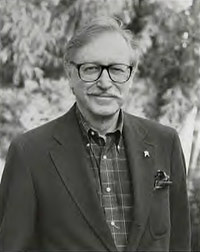
were produced by Leslie Stevens and Robert H. Justman (Star Trek, seen
right), the series experienced some notable changes midseason. Clearly,
NBC did not know how to market Search. They also failed to successfully
market Star Trek a couple of seasons earlier. Search was
broadcast Wednesday nights at 10:00 pm but should have run at an earlier
time to attract a younger audience. After the first 15 episodes of Search
were produced by Leslie Stevens and Robert H. Justman (Star Trek, seen
right), the series experienced some notable changes midseason.
Leslie Stevens
reportedly was compelled to leave the day-to-day production of the series
after NBC discovered that he was working a deal with a competing network.
Nowadays it is common for TV producers to have projects with different
studios and networks, but back in the early 70's, the practice was frowned
upon.
The last
eight episodes were produced by story editor Anthony Spinner (The Man
From UNCLE). It
was at this point that certain changes were made to the Probe Control
sets and in the supporting cast.
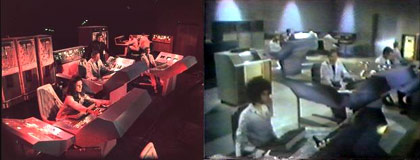
First of
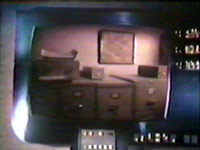
all, the Probe Control set changed from its wide open "dark airplane cockpit"
look to a brightly lit office look with the addition of a white floor
and cinder block walls. The Probe monitor screen, which previously was
lit in red, was now blue instead. Next, the five Probe Control technician
regulars (Angel Tompkins, et al) were reduced to two.
 There
were changes in the production crew as well. When Stevens departed, Robert
Justman and Angel Tompkins also left. This meant that the new producers
had to continue the series without Leslie Stevens' vision and it showed.
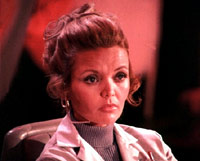
Angel Tompkins was replaced for one episode by Deanna Lund (seen left),
who previously appeared in Irwin Allen's Land of the Giants. There
were changes in the production crew as well. When Stevens departed, Robert
Justman and Angel Tompkins also left. This meant that the new producers
had to continue the series without Leslie Stevens' vision and it showed.
Angel Tompkins was replaced for one episode by Deanna Lund (seen left),
who previously appeared in Irwin Allen's Land of the Giants.
Angel Tompkins
will be releasing an autobiographical book soon and will go into some
fascinating backstage stories relating to Search, her career, and
interesting life experiences. Angel continues to act in movies and TV.
In 1985 she had a regular role in General Hospital, but many of
her fans feel that she never quite had the career she deserved.
READ
PART TWO:
What happened to the show? |